



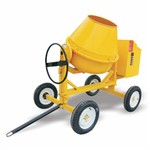
Stabilized Soil Mixing Plant
What is Stabilized Soil Mixing Plant
A stabilized soil mixing plant is a combination of kinds of machines used for mixing stabilized soil, which is used for highway construction, municipal road projects, and fertile airport areas. The plant produces stabilized soil with different gradings in a continuous way. Such a plant usually contains a cement silo, measuring and conveying system, and mixing devices.Stabilized soil mixing plants are of two kinds: the portable stabilized soil mixing plant and the stationary stabilized soil mixing plant. The portable stabilized soil mixing plant has wheels on each part and can be driven by a trailer, but has low productivity. The stationary plant has larger productivity but is less flexible, and needs a firm groundwork.
Advantages of Stabilized Soil Mixing Plant
Stabilized soil mixing plant with a transport unit centralized control systems, batching system, mixing, lifting and loading finished materials function, a stop on the use, by a simple drawing or folding, transport just need a truck.
Stabilized soil mixing plant twin-shaft compulsory mixing console, the machine uses the overall function of the design, rational distribution, measurement precision, easy maintenance, easy to install, easy to move, fitness stations, and stirred uniform and efficient.
The device is suitable for the production of various grassroots stirred stabilized soil material.Widely used grade highways, airports, municipal construction, high-speed railway passenger line,especially for multi-point line is long and often limited relocation and site construction.
Stabilized soil mixed with plant equipment installation and commissioning fast and rapid, out of the box, put into production quickly.


Why Choose Us
Our Factory
Ningdu Xingye Machinery Manufacturing Co., Ltd. is located in Jiangxi, a major industrial province in China. As a global supplier of mixing equipment and parts, Ningdu Xingye Machinery Manufacturing Co., Ltd. is committed to creating added value for global customers. Ningdu Xingye Machinery Manufacturing Co., Ltd. has 15 years of professional production experience. The 20,000 square meter factory is located in the Ningdu County Industrial Park, Ganzhou City, Jiangxi Province. There are more than 100 professional production workers, equipped with staff dormitories, canteens, living and leisure areas, sports and fitness areas and other living facilities, providing employees with a good working environment.
Our Product
Ningdu Xingye Machinery Manufacturing Co., Ltd. Products includes the following:
1. Concrete Batching Plant
2. Concrete Mixer
3. Stabilized Soil Mixing Plant
4. Batching Machine
5. Cement Silo
6. Screw Conveyor
Our Certificate
We always feel that all success of our company is directly related to the quality of the products we offer. They meet the highest quality requirements as stipulated in ISO9001, ISO14000:14001 SGS guidelines and our stringent quality control system.
Our Service
Pre-sales service: We have a professional design team to customize mixing equipment according to customer needs.
In-sale service: Professional production experience, 20,000 square meters factory, workers with professional welding certificates and rich production experience. If customers have any questions, a professional team will answer them in time.
After-sales Service: Excellent after-sales installation and technical guidance.
How to Choose a Stabilized Soil Mixing Plant
Concrete and stabilized soil are two different engineering construction materials with different uses. Stabilized soil is a common roadbed or foundation, especially used in highways. Concrete is a commonly used adhesive in various construction projects.
Since the production of stabilized soil requires a small proportion of cement, the number of cement silos in the soil cement batch plant is very small and often only one or two are enough. The soil cement mixing plant uses a twin-shaft continuous liner-less mixer while the concrete batching plan uses a JS series twin shaft concrete mixer.
The stabilized soil mixing plant is a key facility used to produce stabilized soil mixtures. It can fully mix soil and additives to provide homogeneous stabilized soil materials. The complete set of equipment of the stabilized soil mixing station requires only one operator, with an output of 200-800t/h, and can mix 2 to 9 different specifications.
Stabilized soil mixing stations have a positive impact on bridge construction. The quality of stabilized soil determines the strength of the bridge. The selection of stabilized soil should be strictly controlled based on actual needs. The proportions of various soils and ash should be strictly controlled, and the mechanical properties should be adjusted according to requirements.
How to choose a stabilized soil mixing station?
1. Firstly, choose a proper soil cement mixer based on the performance indicators of the stabilized soil during the construction of the stabilized soil mixing station.
2. Choose the specifications of the soil cement batch plant based on the task volume of stabilized soil construction and its construction period.
3. The stabilized soil mixing station should fully consider the impact of the construction object and the construction environment to ensure smooth construction and construction quality.
Stabilized soil generally refers to the use of lime, cement, fly ash and other binders with soil, gravel or other aggregates. Stabilized soil mixing plant is a collection of machinery and equipment for producing stabilized soil. It mixes various mixtures to make stabilized soil. It includes: cement tank, metering and conveying equipment, mixing equipment.
The stabilized soil mixing plant is mainly composed of mixing system, batching system, conveying system, control system and cement silo storage. The mixing system generally adopts a double-horizontal shaft forced continuous pushing mixing method, the batching system adopts a flat belt conveyor, variable frequency control weighing accuracy, the conveying system adopts a small angle belt conveyor, high-quality seamless vulcanized joint ring belt, and the control system adopts a fully automatic control module, which is stable and safe.
Stabilized Soil Mixing Plant


1. Transport and install the stabilized soil mixing plant according to the original factory instructions, and debug it. Ensure that the equipment is installed correctly to avoid safety hazards during operation.
2. Check whether there are people or foreign objects under the lifting bucket in the storage area. When the mixing plant is working, people and foreign objects are strictly prohibited from entering the above areas to ensure work safety.
3. Check the oil level and oil quality of the gearbox. If the oil is insufficient, add it, and if it is not clean, replace it.Keep the gearbox in good condition to ensure the normal operation of the equipment.
4. Check the wear of the ground material, the discharge gate, and the mixing drum. If the wear exceeds the limit, it should be replaced in time to ensure the mixing quality.
5. Check whether the bolts of each part are tightened. Ensure that the various parts of the equipment are firmly connected to avoid looseness during operation.
6. The rubber sleeve connecting the weighing bucket should not be subjected to tension and pressure to avoid affecting the weighing accuracy. Ensure measurement accuracy and affect the concrete mix ratio.
7. Check whether the power supply and water source meet the machine requirements and whether the connection is reliable. Ensure that the equipment has a stable supply of power and water.
8. Carefully check the electrical device to ensure that the machine can be controlled accurately and timely, and to ensure that there are no abnormal phenomena such as leakage and short circuit. Ensure the safety and reliability of the electrical system.
9. Check that all switches should be in the cut-off position and all fuses should be properly installed. Avoid safety accidents caused by accidental start-up of the equipment.
10. Check the installation of the steel rope of the lifting bucket and the dragline, the drum winding should be correct, and the limit switch should be adjusted correctly, safe and reliable. Ensure the safe operation of the lifting device.
11. Check the wear and corrosion of the steel rope. The steel rope should be replaced if the diameter is reduced by 10%. Avoid equipment damage or personal injury caused by steel rope breakage.
12. Check the braking sensitivity of the dragline.Ensure that the braking system works properly and ensure safe operation.
Check whether the weighing device can be used normally. The measurement should be accurate and the error should not exceed 1%. Ensure the accuracy of the stabilized soil.
Specifications
|
Model |
WCZ400 |
WCZ500 |
WCZ600 |
|
|
Capacity |
400t/h |
500t/h |
600t/h |
|
|
Installed power |
100kW |
123kW |
141kW |
|
|
Metering accuracy |
±1 % |
±1 % |
±1 % |
|
|
Metering mode |
Continuous accumulative metering |
|||
|
Aggregate hopper |
4×10 m3 |
4×12 m3 |
4×12 m3 |
|
|
Filler silo |
1×100 t |
1×100 t |
1×100 t |
|
|
Water tank(optional) |
4m3 |
4m3 |
4m3 |
|
|
Mixing mode |
Horizontal twin-shaft continuous (alternative double mixer ) |
|||
|
Mixer motor power |
45kW |
2x30kW |
2x37kW |
|
|
Conveying belt width |
800mm |
1000mm |
1000mm |
|
|
Storage hopper |
8m3 |
8m3 |
8m3 |
|
|
Discharging height |
3.7m |
3.7m |
3.7m |
|
|
Power standard |
380V/50HZ |
380V/50HZ |
380V/50HZ |
|
|
Covering area |
15m×44m |
15m×46m |
15m×46m |
|
Components of Stabilized Soil Mixing Plant
The stabilized soil mixing plant now plays an important role in road construction. It has six major components, namely: aggregate feeding system, stabilizer feeding system, water supply system, mixing system, finished product transportation and storage system, control system and other parts.
The Aggregate system: It consists of aggregate bin, weighing system and feeding belt. The silos can be configured according to requirements, such as two silos, three silos, four silos, six silos, etc. A variety of aggregates can be configured. These are flexibly configured according to actual needs.
The mixing system: It is of a twin-shaft compulsory mixer, featuring uniform mixing, high mixing efficiency and good mixing quality.
The stabilizer feeding system: It is used to store cement and lime powder and other materials, which are conveyed to the mixer through the conveying device and mixed with the aggregate at the same time.
Water supply system: A certain amount of water and additives need to be added during the mixing process.
Finished product storage system: After the mixer completes the mixing, the finished product is conveyed to the storage system through the conveyor. Then, the material is loaded into the transport vehicle through the discharge door of the storage system.
Control system: The control system can effectively manage and control each system.
The variable frequency speed regulation device of the stabilized soil mixing plant is a key part during the whole production process. Different speeds can be used according to different processes, and energy saving can be achieved through frequency conversion speed regulation.

Future Trend of Stabilized Soil Mixing Plant
A stabilized soil mixing station is a specialized construction equipment used to mix various materials such as cement, lime, fly ash, and water with soil to create stable and durable soil for construction projects. The purpose of this equipment is to improve soil properties, increase load-bearing capacity, and enhance overall quality of construction.
The advantages of a stabilized soil mixing station include efficient mixing process, cost-effectiveness, reduced construction time, and environmentally friendly practices. This equipment can greatly impact the stabilized soil mixing station market, as it offers innovative solutions for infrastructure development projects. The stabilized soil mixing station market is expected to grow at a cagr of 7.8% during the forecasted period, indicating a rise in demand for such equipment in the construction industry.
Stabilized soil mixing station is used in various applications such as highway maintenance for repairing damaged roads, soil and gravel road maintenance for improving road conditions, airport construction for building strong runways, and others. It is used to mix various materials like cement, water, and stabilized soil to create a strong base for construction projects. The fastest growing application segment in terms of revenue is airport construction, as the demand for new airports and runway expansions increases globally. Stabilized soil mixing station plays a crucial role in ensuring the durability and stability of airport infrastructure.
Integration of iot technology
Stabilized soil mixing stations are increasingly incorporating iot technology for remote monitoring, maintenance, and automation, leading to improved efficiency and cost savings.
Shift towards eco-friendly practices
With growing environmental concerns, there is a trend towards using sustainable materials and practices in the production of stabilized soil, such as reducing cement content and utilizing recycled materials.
Rising demand for mobile mixing stations
The construction industry is witnessing a rise in demand for portable and mobile stabilized soil mixing stations, offering flexibility and ease of transportation to different job sites.
Increased automation and digitization
Automation and digitization are becoming more prevalent in stabilized soil mixing stations, allowing for precise control of mixing processes and reducing human error.
How to Maintain Stabilized Soil Mixing Plant
Stabilized soil mixing plant is a kind of equipment specially used for producing and mixing stabilized soil. It usually consists of mixing device, metering device, conveying device and control system. It is an efficient and continuous mixing equipment that can produce high-quality stabilized soil and is widely used in the construction of highways, railways, buildings and other projects.
Then the following points should be paid attention to after the stabilized soil mixing plant is used and during regular maintenance:
Clean the equipment: After each use of the stabilized soil mixing station, the equipment must be cleaned, especially the mixing drum, mixing blades and other components must be thoroughly cleaned to prevent residues from causing damage to the equipment.
Inspect equipment: During regular maintenance, all components of the stabilized soil mixing station should be inspected, especially the wear and tear of transmission components such as bearings, gears, chains, etc. Damaged components should be replaced in a timely manner to ensure normal operation of the equipment.
Lubrication equipment: Lubricate each lubrication point of the stabilized soil mixing station regularly to ensure the lubrication effect of the equipment and reduce equipment wear and heat generated by friction.
Fasten the equipment: Check and tighten each connection part of the equipment, especially the connection of the mixing drum, mixing blades and other components to ensure that the equipment will not loosen or fall off during operation.
Circuit system: Check the circuit system of the equipment, including wires, cables, plugs, etc., to ensure the safety and reliability of the circuit system and prevent electrical failures during the operation of the equipment.
Hydraulic system: Check various components of the hydraulic system, including hydraulic pumps, hydraulic valves, hydraulic cylinders, etc., to ensure the normal operation and sealing performance of the hydraulic system.
Protective devices: Check the protective devices of the equipment, including safety doors, guardrails, warning signs, etc., to ensure that the protective devices of the equipment are intact and to ensure the safety of operators.
Maintenance records: Record each maintenance situation, including maintenance parts, replacement parts, maintenance personnel and other information, so as to track, manage and maintain the equipment.