



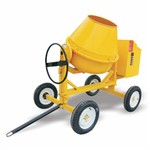
JS Concrete Mixer
What is JS Concrete Mixer
JS concrete mixer is twin horizontal shafts forced mixer. Combining advantages of single unit stand-alone operation and simple concrete batching plant with PLD series batching machine, the unit can work in concrete mixing station for prefabricated-component factories of various sizes and construction of highway, bridge, water, conservation and dock, etc. It can mix no-slump concrete, plastic concrete, fluid concrete, lightweight aggregate concrete and various mortar, as a widely used high efficiency model.
Advantages of JS Concrete Mixer
Consistent Mix
One of the main benefits of using a JS concrete mixer is that it produces a consistent mix. The rotating blades ensure that the ingredients are mixed thoroughly and evenly, producing a high-quality mix every time. This is particularly important for projects that require a high level of precision, such as resin-bound surfaces.
Less Waste
Because JS concrete mixers produce a consistent mix, there is also less waste involved in the mixing process. The mix is evenly distributed and there are no clumps or pockets of unmixed materials, which means that every bit of material is utilized. This is especially important for expensive materials like resins and other specialized compounds.
Versatility
JS concrete mixers can be used for a wide range of materials, including concrete, cement, resin, and other compounds. This versatility makes them a valuable tool for many different industries, including construction, landscaping, and manufacturing. They can also be used for mixing small or large batches, depending on the project's needs.
Faster Mixing Times
JS concrete mixers can mix larger quantities of material in a shorter amount of time than other types of mixers. This is because the mixing action is more thorough and efficient, allowing for a larger volume of material to be mixed at once. This can be especially beneficial for larger projects or when working on a tight timeline.


Why Choose Us
Our Factory
Ningdu Xingye Machinery Manufacturing Co., Ltd. is located in Jiangxi, a major industrial province in China. As a global supplier of mixing equipment and parts, Ningdu Xingye Machinery Manufacturing Co., Ltd. is committed to creating added value for global customers. Ningdu Xingye Machinery Manufacturing Co., Ltd. has 15 years of professional production experience. The 20,000 square meter factory is located in the Ningdu County Industrial Park, Ganzhou City, Jiangxi Province. There are more than 100 professional production workers, equipped with staff dormitories, canteens, living and leisure areas, sports and fitness areas and other living facilities, providing employees with a good working environment.
Our Product
Ningdu Xingye Machinery Manufacturing Co., Ltd. Products includes the following:
1. Concrete Batching Plant
2. Concrete Mixer
3. Stabilized Soil Mixing Plant
4. Batching Machine
5. Cement Silo
6. Screw Conveyor
Our Certificate
We always feel that all success of our company is directly related to the quality of the products we offer. They meet the highest quality requirements as stipulated in ISO9001, ISO14000:14001 SGS guidelines and our stringent quality control system.
Our Service
Pre-sales service: We have a professional design team to customize mixing equipment according to customer needs.
In-sale service: Professional production experience, 20,000 square meters factory, workers with professional welding certificates and rich production experience. If customers have any questions, a professional team will answer them in time.
After-sales Service: Excellent after-sales installation and technical guidance.
Components of JS Concrete Mixer
1.Mixing system. Mixing system consists of electric motor, belt pulley, exposed gear, reducer, oil supply system, mixing drum, mixer shaft, mixing arm, mixing blades and side entry blade. Mixing drum is equipped with two horizontal mixer shafts and each shaft is equipped with mixing blades, at the both sides of the cylinder was equipped with side blades respectively, which can scrape the concrete of the end face and change the flow direction of the concrete. In addition, there is sealing device between mixing drum and mixer shaft to ensure the good sealing quality.
2.Feeding system. Feeding system includeshoisting mechanism, feeding frame, hopper and feeding nozzle.
3.Water supply system. Water supply system is made up of water pump, throttle valve, cleaning device and spray system. Throttle valve can adjust the water-carrying capacity device and the total water supply is adjusted by the time relay.
4.Discharging system. Discharging system includes discharge door, air cylinder or hydraulic cylinder and this process can be accomplished by three ways: hydraulic control, pneumatic control and manual control. Moreover, the discharge gate driven by the pneumatic system is stronger than driven by the hydraulic system, and hydraulic system can avoid the air shortage and can not open the discharge gate. Manual operating lever is ready for temporary electricity interruption, hydraulic system or air system fails to work. At ordinary times, should dismantle it and avoid it will hurt people. As for hydraulic system and air system, you can choose an arbitrary you like.
5. Electrical control system. There are air switch, fuse protector and thermal relay. All control buttons, air switch and indicator light are set on the door of distribution box and has a door lock. And set a protective door outside the button. In the distribution box, electrical components are equipped on the insulation board, it is reliable, safe and easy to maintain.
How Do You Choose the Right JS Concrete Mixer
Mixer size
The first factor to consider is the size of the mixer, which depends on the volume and frequency of your concrete demand. If you need to mix large batches of concrete for a long-term project, you may want to invest in a stationary or truck-mounted mixer that can handle up to 12 cubic meters per hour. On the other hand, if you need to mix small batches of concrete for a short-term project, you may opt for a portable or wheelbarrow mixer that can handle up to 0.1 cubic meters per hour.
Mixer type
The second factor to consider is the type of mixer, which depends on the consistency and workability of your concrete mix. There are two main types of mixers: drum mixers and pan mixers. Drum mixers rotate the drum to mix the concrete, while pan mixers rotate the blades to mix the concrete. Drum mixers are suitable for mixing stiff and dry concrete mixes that require less water and more compaction. Pan mixers are suitable for mixing fluid and wet concrete mixes that require more water and less compaction.
Mixer power
The third factor to consider is the power of the mixer, which depends on the speed and efficiency of your concrete mixing. The power of the mixer is measured by the motor or engine that drives the rotation of the drum or the blades. The power of the mixer can range from 0.5 to 5 horsepower, depending on the size and type of the mixer. Generally, the larger and faster the mixer, the more power it requires. You should also consider the fuel source of the mixer, whether it is electric, gas, or diesel.
Mixer features
When choosing a mixer, it's important to consider the features that will enhance the convenience and safety of your concrete mixing. One feature to look for is a tilting mechanism, which allows you to adjust the angle of the drum or pan to control the discharge of concrete. A loading hopper can be useful for loading materials into the mixer without manual labor or spillage. Additionally, having a mixing timer will enable you to set the duration of the mixing cycle for uniformity and quality of the concrete. Lastly, a safety switch is highly recommended to stop the mixer in case of emergency or malfunction.
Mixer cost
The fifth factor to consider is the cost of the mixer, which depends on your budget and return on investment. The cost of the mixer can vary widely depending on the size, type, power, and features of the mixer. You should also consider the maintenance and operation costs of the mixer, such as fuel, repairs, and spare parts. You should compare the cost of buying, renting, or leasing a mixer and choose the option that suits your project needs and financial situation.
Mixer reviews
The sixth factor to consider is the reviews of the mixer, which depend on the feedback and experience of other users. You should research the reputation and reliability of the mixer brand and model that you are interested in. You should also read the reviews and ratings of the mixer from online platforms, magazines, or forums. You should look for the pros and cons of the mixer, such as performance, durability, ease of use, and customer service.
Feeding process.When feed the aggregates, lift the transmission mechanism and drive the steel rope and make the hopper up to the feeding position along the guide rail, the front roller of the apophyge enters into the horizontal crossroad, while the hopper body will keep on going up, separate the apophyge and hopper body and open the aggregate discharge door. With the rise of the hopper body, the discharge door open gradually and the aggregate is put into the mixing drum continuously through the loading hopper.
Mixing process. The electrical motor drives the secondary gear reducer, twin shafts of the reducer through two pairs exposed gears make two horizontal mixing shafts do reverse constant speed rotation respectively.
Discharging process. After finish the mixing process, you can choose how to discharge the materials. By hydraulic or air or manual operating lever. When it begins to discharge, pumped high pressure gas in the cylinder stator, the cylinder drives the rocking beam and makes the portasystemic rotate around the bearing pedestal and achieve the purpose of the door opening and closing.

How to Use a JS Concrete Mixer in 6 Steps
Follow Safety Procedures
Always wear long sleeves and pants, closed-toed shoes, and safety goggles and gloves when operating a cement mixer. Never put your hands or tools inside the mixer while it is running.
Work in a clear area outdoors and set up barriers and signs that warn people that the concrete is wet. Do not use the concrete fixture until it is completely dry.
Assemble the Mixer
Before you start using the mixer, make sure it is set up on a level surface and near a water supply. Check the oil level using a dipstick and prepare to build the stand. Carefully assemble the mixer and ensure all parts are firmly put together.
Connect the Drum and Position It Correctly
Once the stand has been assembled, slightly tip the mixer and slot the stand into the swivel base. Using the d-clamp, secure the base into place. The swivel base will then need unlocking from the mixer frame before raising the unit back up into an upright position.
Power on the Mixer
Once safely set up, switch the motor on to power the mixer and open the fuel tap. Never turn the mixer on whilst it is loaded.
Mix the Concrete Correctly
Read the instructions that came with your cement mix and add the right quantities of the cement and water as the mixer is running. It is dangerous to overload a concrete mixer - doing this could also ruin the concrete - so be sure to mix it in batches that fit the mixer's capacity.
As you mix the concrete, it is very important that the mixture isn't too wet or too dry. Failing this, your concrete won't be easy to work with and could actually compromise your project, as the mixture won't dry correctly.
Perfectly mixed concrete will move easily around the drum mixer, but won't slosh around or crumble as it moves. You may need to add more water or concrete mix to achieve this.
One good tip is to pay attention to how the concrete moves as the drum turns. If it reaches the top of the mixer before it falls, the mix is too dry. On the other hand, if it doesn't reach the side, it is too wet.
Pour the Concrete Carefully
Depending on the type of mixer you are using, you will either pour the concrete directly into the mould or onto the surface you are concreting or you will pour it into a wheelbarrow.
It is best to have two people ready to help. One person should hold the wheelbarrow or assist with a shovel as the concrete is poured while the other tips the mixer.
Tip the mixer slowly, but at an angle that allows the concrete to run out of the drum. Avoid pouring it too quickly, which could cause you to lose control of the mixer or the concrete.

The Concrete Is Not Mixing Properly
This can be caused by a clogged impeller (the rotating arm that mixes the concrete);a low water level (which can prevent the concrete from mixing the way it should) or too much concrete in the mixer (which can also prevent the concrete from mixing properly). Check your machine's impeller, its water levels and its concrete level and remember to keep its levels steady.
If your concrete continues not to mix properly, you may want to take your machine in for concrete mixer machine repair services.
The Mixing Barrel Doesn't Turn
This is a very troubling problem, considering the concrete can't mix correctly if the barrel is malfunctioning. This could be caused by a problem with the belt in your machine that connects to the output pulley on its engine's crankshaft. The belt could be broken, loosened or stretched to the point where it doesn't work the way it should.
This could also be caused by something blocking or holding your barrel, preventing it from turning.
The Concrete Is Not Smooth
One of the best benefits of using an on-site concrete mixer machine is that it'll give you smooth, perfectly-mixed concrete when you need it. So, if your concrete is lumpy or unusable, that's a real problem.
This could be caused by using the wrong type of concrete mix or by not adding enough water. Please make sure you're using the right type of mix and that you're adding the right volume of components to your mixer.
The Mixer Is Leaking
If your concrete mixer is leaking, this could be a problem with the seals or gaskets, these prevent the concrete from leaking out. It could also be a sign that the barrel of the machine has cracks or holes in it.
Essential Tips For Maintain JS Concrete Mixer
Cleaning
One of the fundamental maintenance tasks for your concrete mixer is keeping it clean. After each use, ensure that you remove all concrete residue and rinse the drum with water. This prevents concrete buildup. which can lead to corrosion and decreased performance over time.
Lubrication
Proper lubrication is vital to prevent wear and tear on moving parts. Regularly inspect and grease the gearbox, bearings. and other critical components as specified in your mixer’s manual. This will help reduce friction and extend the lifespan of your machine.
Check for Wear and Tear
Periodically inspect your concrete mixer for signs of wear and tear. such as loose or damaged components. Address any issues promptly to prevent them from developing into more significant problems.
Belt and Chain Maintenance
If your concrete mixer uses belts or chains. make sure these tensioned correctly and free from damage. Tighten or replace them as needed to prevent slippage and ensure smooth operation.
Electrical and Control System
For mixers with electrical components, check the control systems. such as wiring, and switches regularly. Ensure all electrical connections are secure to avoid electrical malfunctions.
Store Properly
When your concrete mixer is not in use, store it in a dry and covered area to protect it from damage. If you live in a region with harsh winters. consider winterizing your mixer to prevent damage from freezing temperatures.
Professional Inspections
Consider scheduling periodic professional inspections of your concrete mixer. especially if it’s a critical component of your operations. These inspections can identify issues early and help you take preventive action.