

Cost structure of mobile concrete mixing plant
- Equipment procurement cost
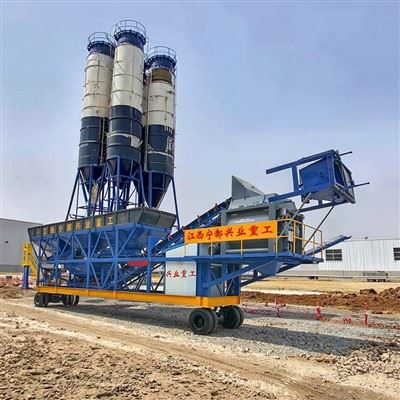
Equipment procurement cost is the bulk of the initial investment. It is affected by many factors, and production capacity is the key factor. Generally speaking, the stronger the production capacity, the higher the equipment cost. For example, a small portable concrete batch plant(such as 25 cubic meters per hour) has a relatively low price, which may be around US$8,700; while a large one (such as 100 cubic meters per hour) can cost up to US$60,800 or even higher. Different model configurations will also lead to price differences. The price of a mixing plant with rich configuration and high degree of automation is naturally higher than that of a basic configuration product. For example, a mixing station equipped with an advanced metering system and an intelligent control system has a high procurement cost, but it can improve production accuracy and efficiency.

- Raw material procurement costs
Different construction projects have different requirements for concrete quality, which determines the difference in raw material procurement costs. Simple buildings may only need cement and fly ash, while projects with high concrete performance requirements also need to add sand, gravel, slag, admixtures, etc., which requires more aggregate silos for storage, increasing equipment investment and raw material procurement costs. In addition, the market price of raw materials fluctuates greatly, and the prices of cement and sand and gravel change frequently due to supply and demand, policies, etc., and the procurement costs are also unstable.

- Transportation and installation costs
Although mobile mixing plants have the advantage of flexible transfer, the transportation and installation costs cannot be ignored. The transportation cost depends on the size, weight, transportation distance and method of the mixing plant. The transportation cost of big mobile concrete batching plants is high, and cross-border or long-distance transportation also involves additional costs such as tariffs and special transportation permits. The installation cost includes on-site installation labor and commissioning costs. The installation of complex mixing plants requires professional technicians, high labor costs, and time-consuming installation and commissioning, which affects the project schedule cost.

- Operation costs
Operation costs include water, electricity, labor, equipment maintenance and other costs. Water and electricity consumption is related to the production scale and operation time of the mixing plant. Continuous high-output operation will lead to a significant increase in water and electricity costs. In terms of labor costs, operators and maintenance personnel are required. The number of personnel and salary levels vary depending on the region and technical requirements. Equipment maintenance costs should not be ignored. Regular maintenance and replacement of wearing parts can ensure the normal operation of the equipment, but increase operating costs. In addition, the use and maintenance costs of loaders and concrete transport trucks must also be included in the operating cost accounting.
- Administrative procedure costs
The construction and operation of portable concrete mixing plants require a series of administrative procedures, such as environmental impact assessment and production safety permits. The handling process involves consultation, testing, approval and other fees, and the procedure requirements and fee standards in different regions are different. If the procedures are not handled in a timely or non-compliant manner, there may be risks such as fines and suspension of work, which will increase additional costs.

The cost of mobile concrete mixing stations is affected by many factors. Enterprises need to fully understand the cost structure and take scientific decisions and effective measures in investment and operation to maximize cost-effectiveness and gain an advantage in the competition in the construction market.


